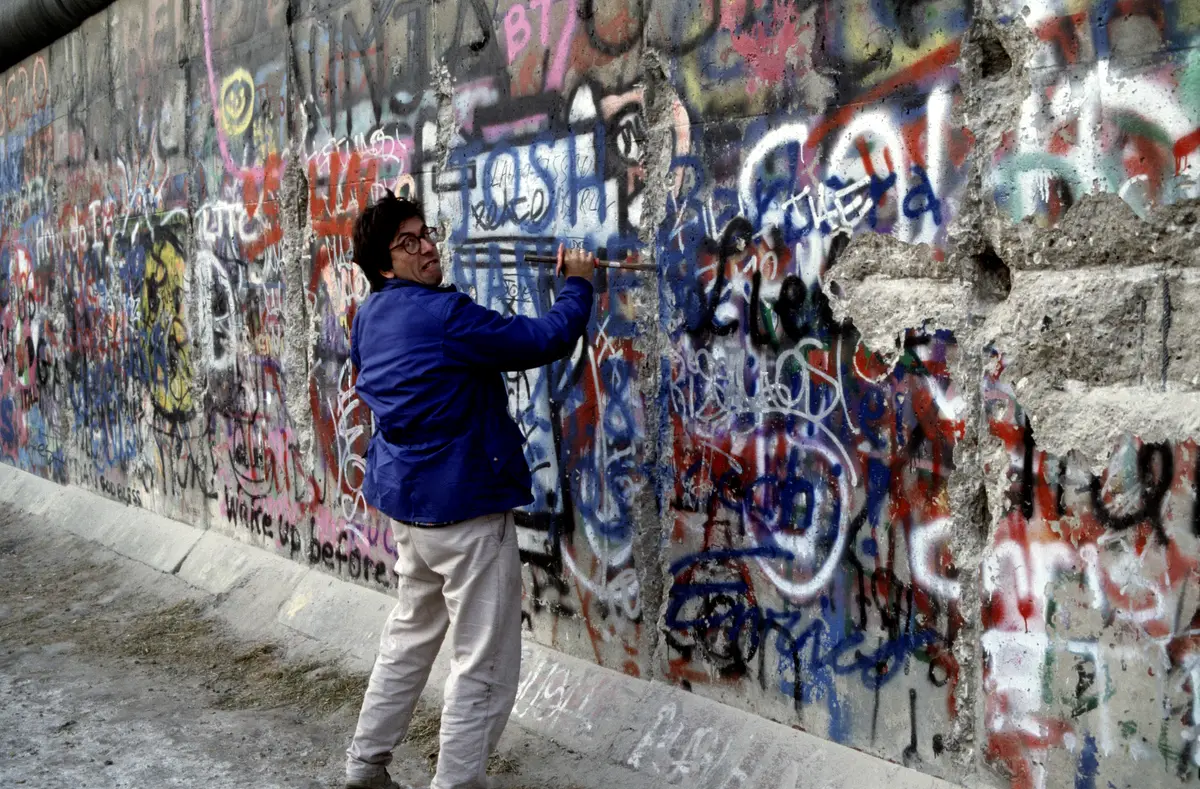
They were called Mauerspechte — wall woodpeckers — and from 10 November 1989 they worked on the Berlin Wall with chisels, screwdrivers, hammers and, at the start, their hands. Many of them were Berliners who had lived beside the thing for twenty-eight years. The sound of it, thousands of small impacts at once, is the detail that everyone who was there mentions.
They are usually told as a happy footnote to 1989. They were also the reason there is so little Wall left to look at.
They went for the painted side
The woodpeckers wanted colour. A grey lump is concrete; a lump with a stripe of spray paint across it is a piece of the Berlin Wall, and that is what could be kept, shown and sold. So the painted face went first, and the painted face was the outer wall: the side that looked at West Berlin, the side the photographs were taken of, the side that carried thirty years of accumulated work by artists and passers-by.
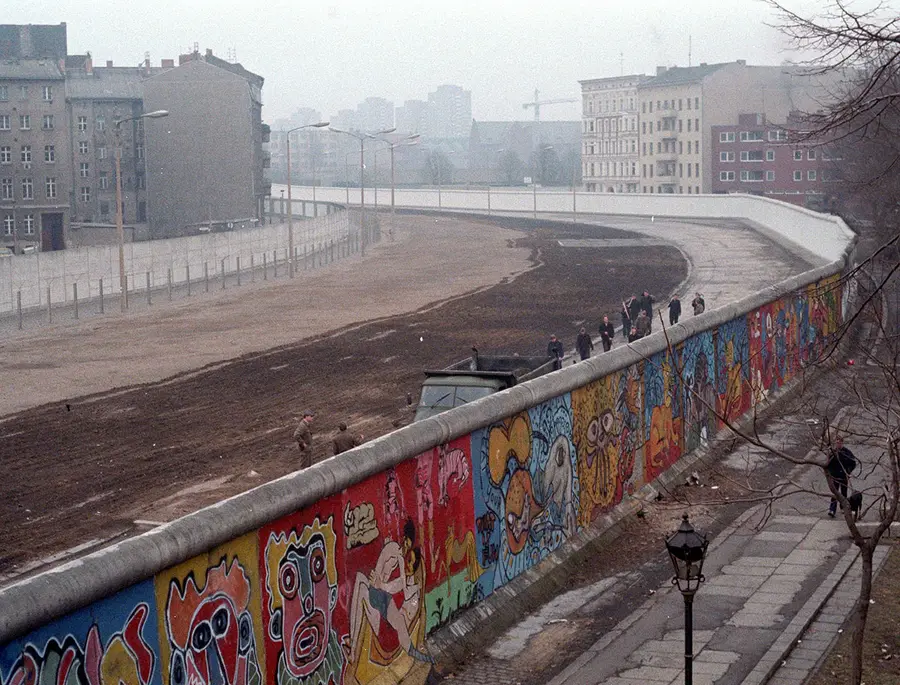
That is why the best-preserved painted surfaces today are not the ones the West saw. The East Side Gallery is 1.3 kilometres of the inner wall, painted after the border opened. The pre-1989 painted surface — the one the woodpeckers were chipping at — very largely no longer exists.
Nobody resolved the argument at the time
There was a genuine conflict here, and it has not really been settled since. Historians and conservators who wanted the structure documented and preserved were arguing, in the winter of 1989, against people dismantling their own prison with hand tools. Both positions were reasonable. One of them won comprehensively.
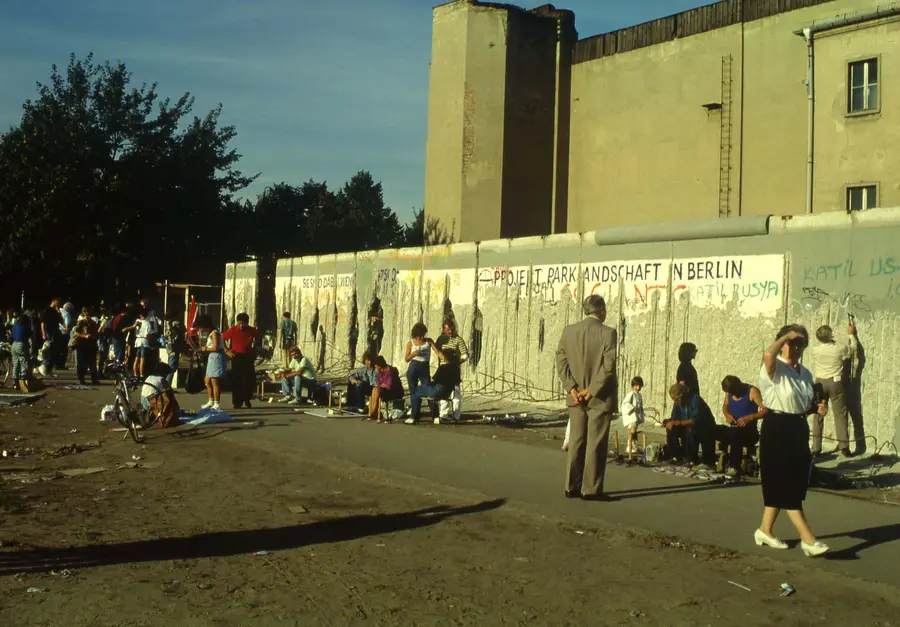
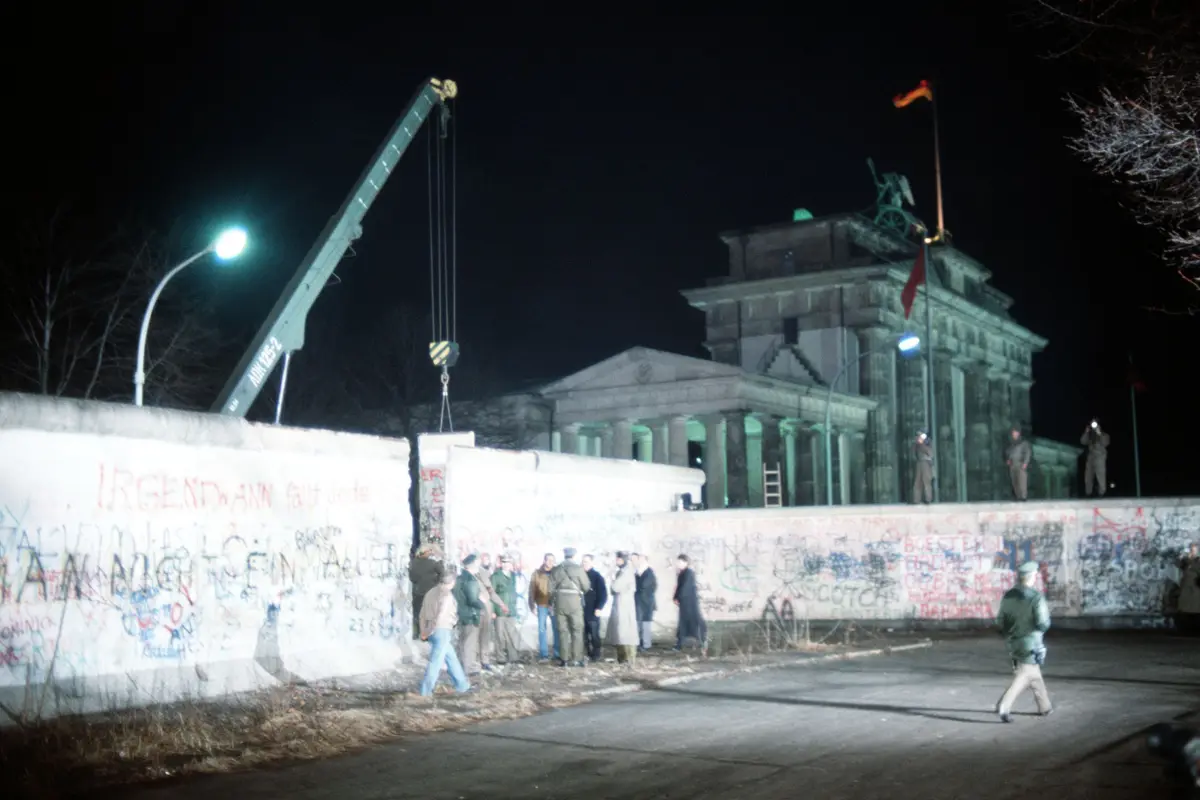
What stopped the woodpeckers was not preservation but scale. From the middle of 1990 the work passed to contractors with heavy plant, and from October to the Bundeswehr. Most of the Wall went into crushers and came out as aggregate for road building.
The damage is the monument
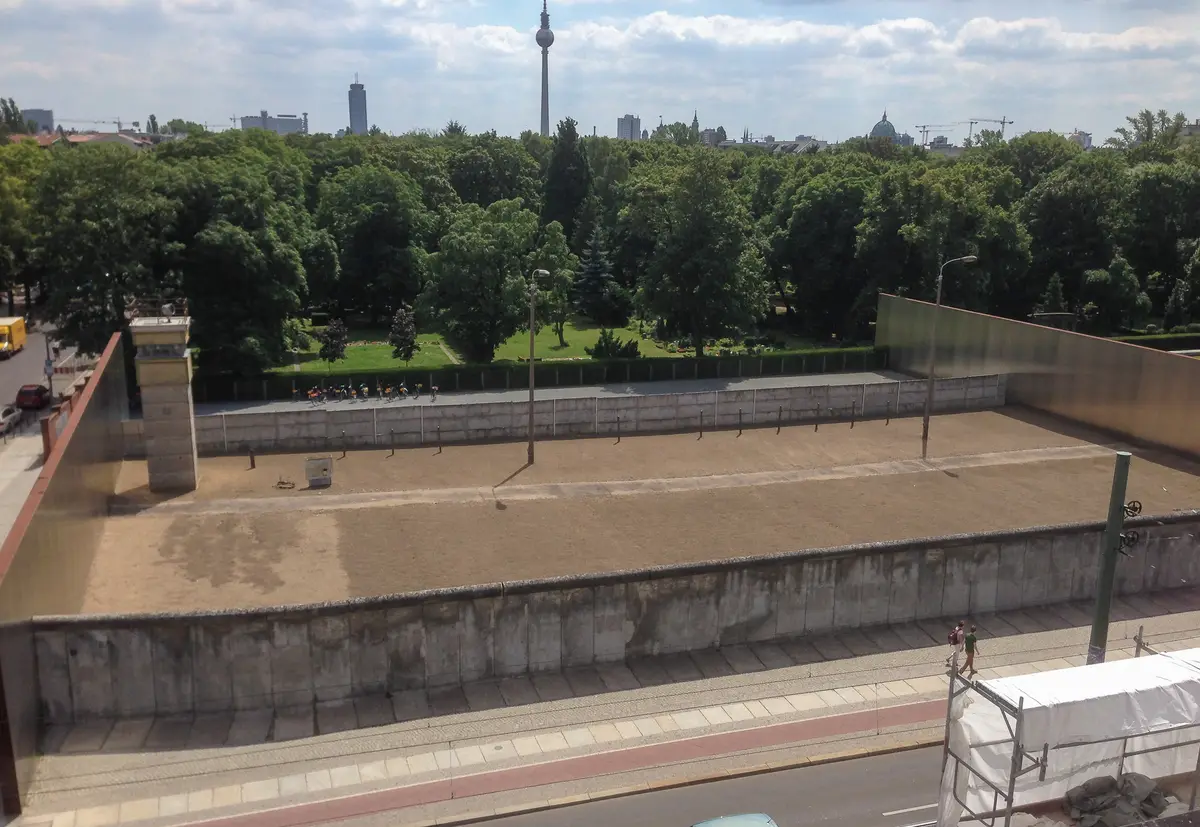
The clearest surviving evidence of what the Mauerspechte did is on Niederkirchnerstraße, where about 200 metres of the outer wall still runs past the Topography of Terror. It has deliberately not been tidied. The concrete is hollowed out in patches, the reinforcing bars are exposed, the top edge is broken away.
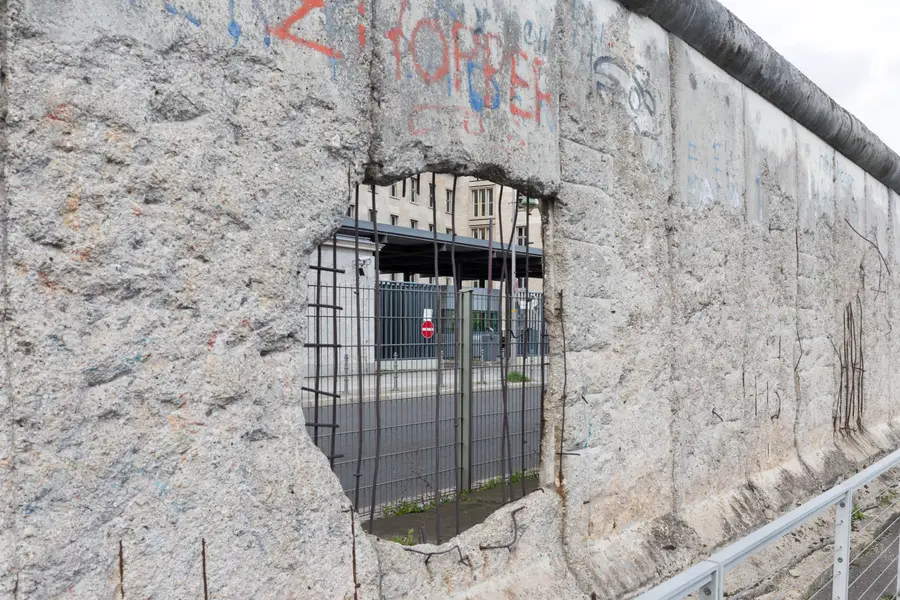
Almost every other preserved stretch has been repaired or repainted, which is defensible and which also removes the record. The Berlin heritage office describes the wall on the grounds of the Invalidenfriedhof as mutilated by souvenir hunters, and that fifteen-metre run is one of the few other places where the damage is left legible.
The market they invented
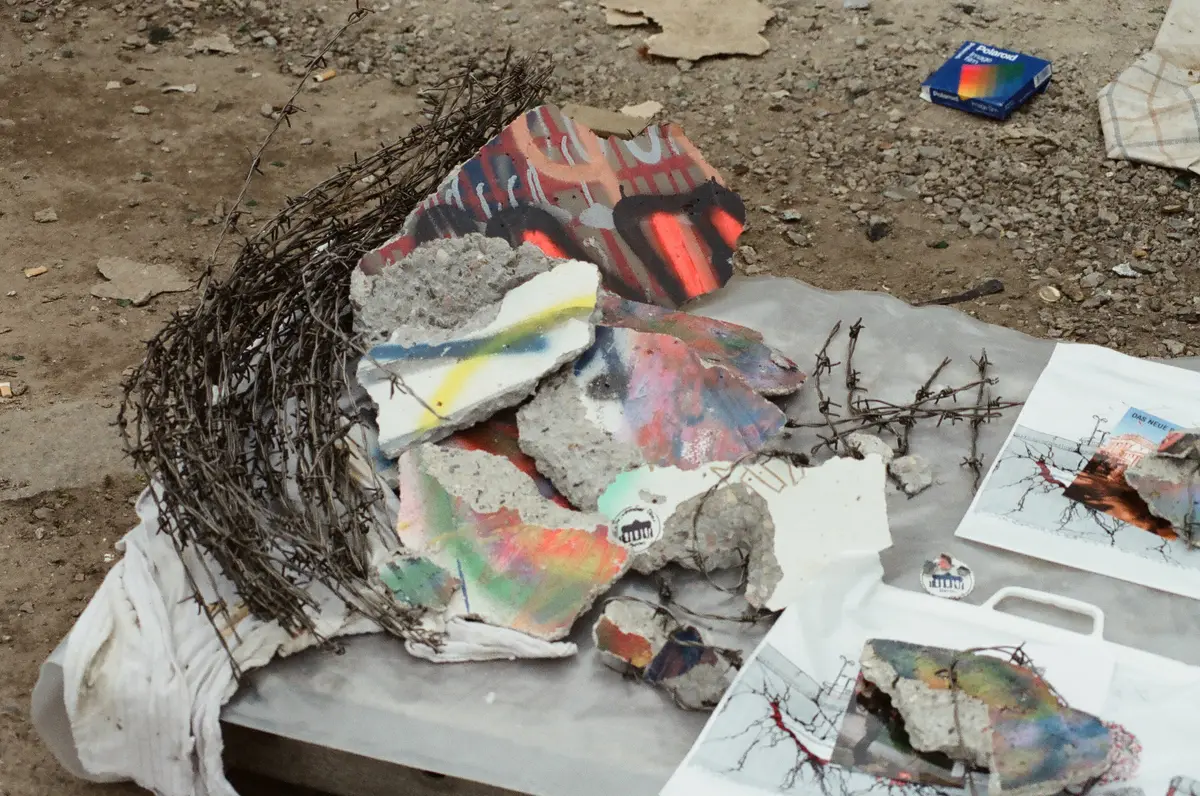
Within weeks of the border opening, fragments were being sold from tables near the Brandenburg Gate, in bags, with hand-lettered certificates. That is the origin of the entire souvenir trade in the Wall: not an official programme but thousands of people with hammers and an instinct that the pieces would be worth something.
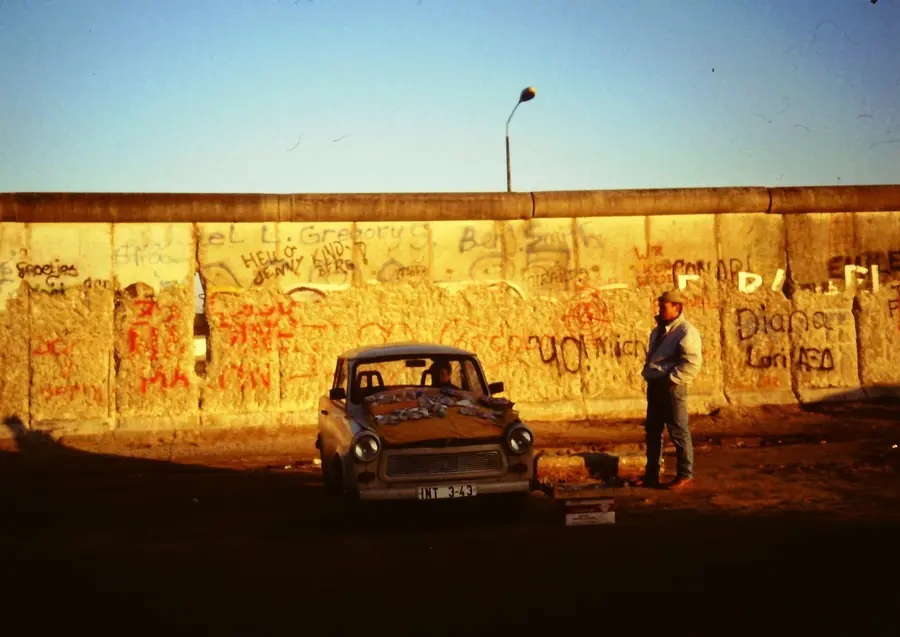
They were right, and the official trade caught up fast. By the spring of 1990 the East German state was selling whole elements through a foreign trade company, with printed certificates of authenticity — the same product, better packaged. Our companion article on how to tell a real piece of the Berlin Wall follows what happened to that market.
The uncomfortable conclusion
This atlas has 611 records because the Wall was broken into portable pieces and carried away. If the Mauerspechte had been stopped, and the border preserved as a monument along its length, there would be a great deal more Wall in Berlin and nothing at all to look for anywhere else.
The scattering and the destruction are the same event. You cannot have the segment in the car park in Ohio without the hole in the wall on Niederkirchnerstraße.
Sources
- #17 Mauerspecht — Berliner ZeitungThe Mauerspechte, their tools and methods, and their place in the events of late 1989.
- German Mauerspechte responsible for Berlin Wall pieces in souvenir shops — GermanyinUSAThe wall woodpeckers as the origin of the fragment souvenir trade.
- Niederkirchnerstraße — Landesdenkmalamt Berlin, Wall monumentsThe roughly 200-metre run of the Grenzmauer 75 on Niederkirchnerstraße, damaged by souvenir hunters and preserved at its original location.
- Rund um den Nordbahnhof — Landesdenkmalamt Berlin, Wall monumentsThe fifteen metres of border wall on the Invalidenfriedhof grounds along Liesenstraße, mutilated by souvenir-seekers.
- Chronology — The Wall NetThe sequence of demolition from November 1989 through the contractor and Bundeswehr phases of 1990.