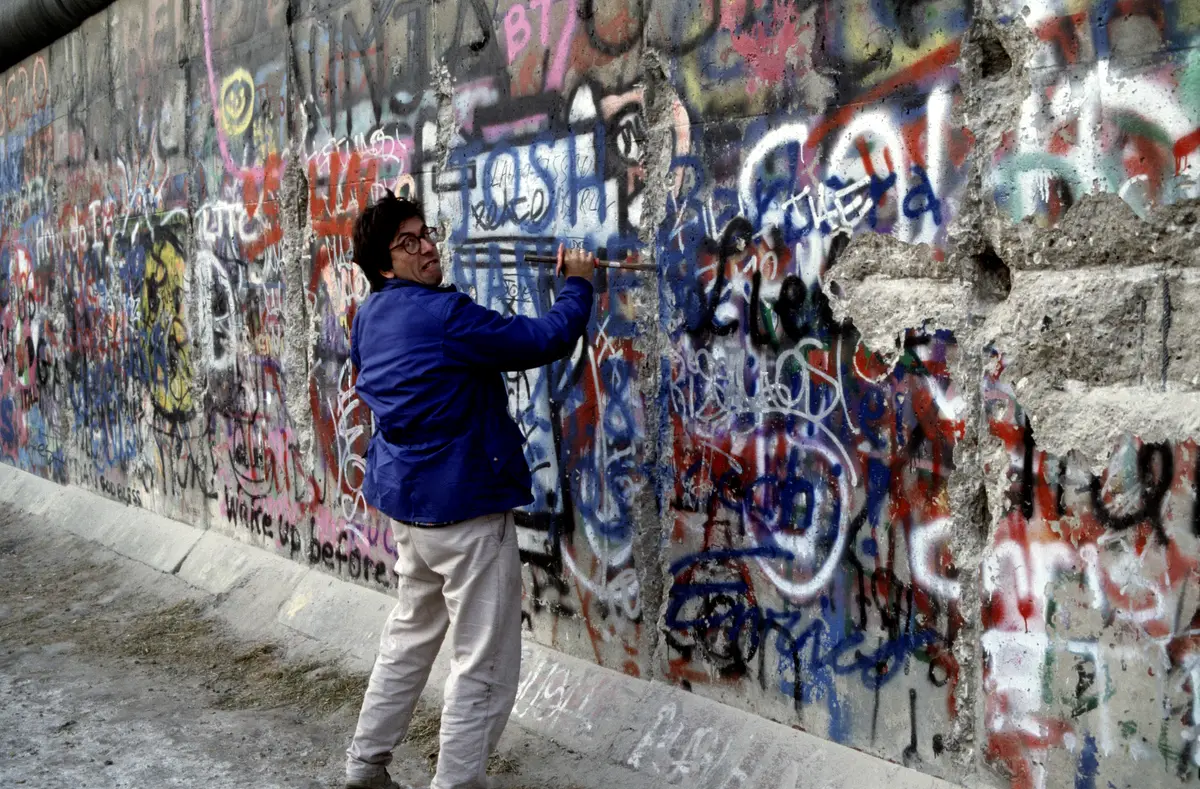
About 45,000 concrete elements made up the Berlin Wall. Rather less than two per cent of it still stands in Berlin. The usual explanation is that it was torn down by a jubilant crowd in November 1989, and that is true of the first few weeks and almost nothing after them. What actually happened to the Wall is that it was dismantled by the state that built it, sold by the government that was about to cease to exist, and disposed of by contractors who ground most of it into road surfacing.
This atlas exists because the remainder went somewhere. It holds 611 records in 62 countries, of which 360 have been researched and written up. Here is the shape of how they got there.
The trade began within weeks
The GDR was out of money. In the spring of 1990 its foreign trade enterprise Limex was authorised to sell the painted segments commercially, working with a West Berlin agency, the LeLé Berlin Wall Verkaufs- und Wirtschaftswerbung GmbH. The proceeds were announced for the East German health service — a promise repeated in the paperwork of nearly every sale that followed.
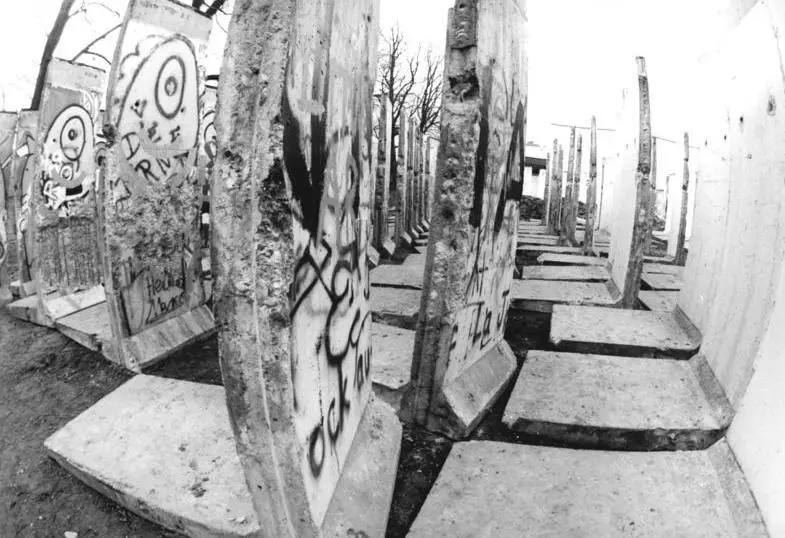
The set-piece was an auction at the Hotel Metropole Palace in Monaco on 23 June 1990. Eighty-one pieces went under the hammer in front of about a hundred collectors and dealers, with a gold-covered catalogue and certificates of authenticity. Four of the lots had been painted by Kiddy Citny on Waldemarstraße in West Berlin in 1984: two large hearts spread across four elements. Two of those four were already in the United States. The other two were bought by a Swiss businessman for over 100,000 marks and stand today on a private plot near Basel.
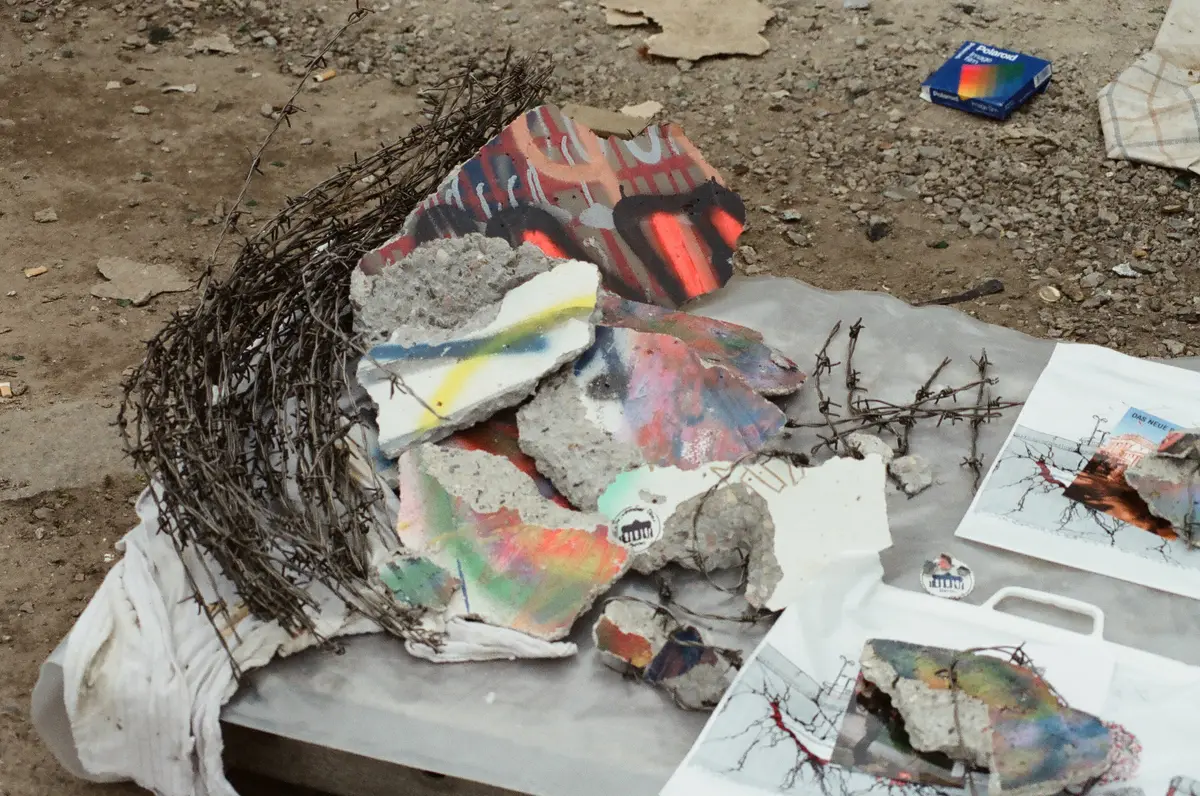
The last lot in that catalogue, number 81, went to the cognac heiress Ljiljana Hennessy and is in a tea house on her estate near Jarnac. The managing director of an Italian cement works paid 20,000 marks for a segment that a German magazine called extraordinarily ugly, and it is still in the works garden at Merone. Eight segments were sold in Monaco and never collected at all; they ended up, with thirty-five others, in a meadow in a Polish village, the largest private collection anywhere.
Monaco is also where the trail runs cold on the money. Where the proceeds went has never been satisfactorily accounted for, and the two artists whose paintings were being sold — Thierry Noir and Kiddy Citny — went to court partly to establish it. They won at first instance in December 1990, lost on appeal, and secured a retroactive share of the profits in 1995.
There is a postscript that says everything about the period. Monaco hosted the sale that scattered the Wall across the world, and the fragment that stands today at the principality's railway station has no recorded provenance at all: neither the administration nor the tourist office could say when or how it arrived.
The second channel was diplomatic
Alongside the commercial trade, the Berlin Senate kept a stock of segments for official gifts, and that channel explains a different class of destination. It is why there are segments at the European Museum in Schengen, a hundred metres from where border controls were abolished; at the Platform of Reunification at Dorasan station, the last stop before North Korea; and on the island of Jeju, beside the memorial to a massacre the Cold War produced in 1948.
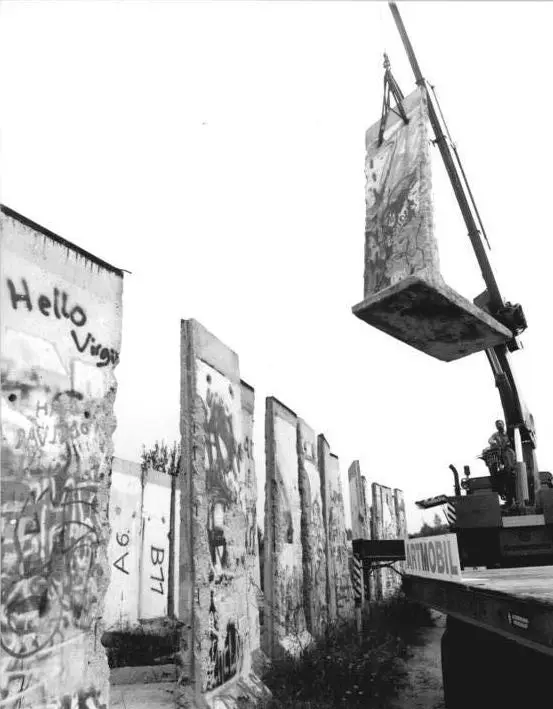
The gifts kept coming long after 1990. A 2.7-tonne fragment painted with his own world-record run was handed to Usain Bolt after the 2009 world championships in Berlin and shipped to an army base in Kingston. Five segments went from a builders' yard in Teltow to a peace park in Uijeongbu, thirty kilometres from the North Korean border. Germany gave Georgia a segment in 2017 for twenty-five years of diplomatic relations.
And a great deal of it was simply thrown away
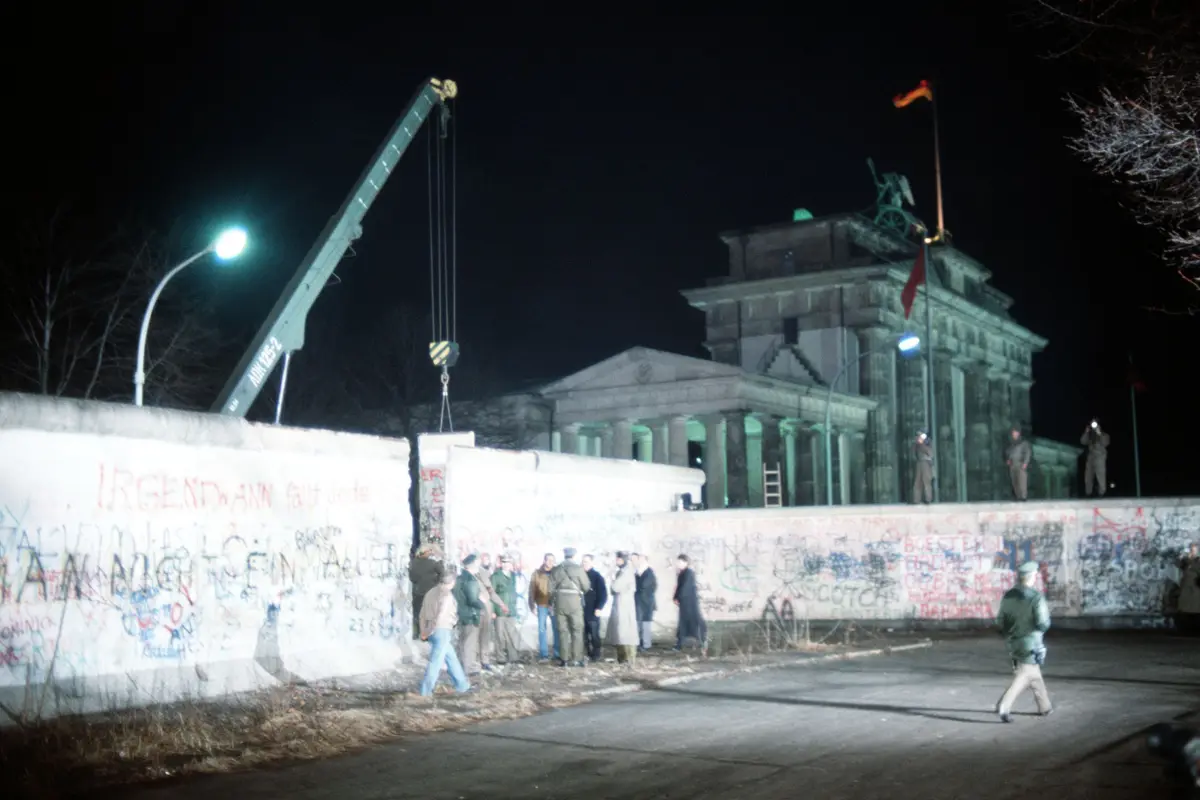
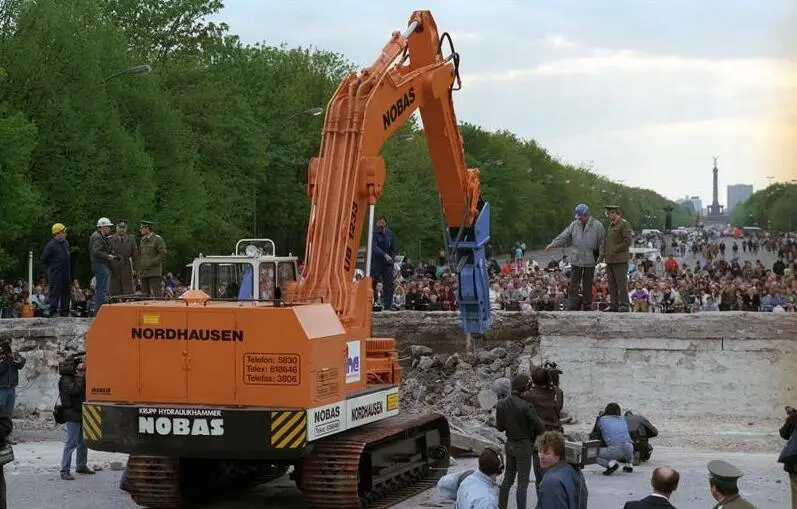
The part that gets least attention is the largest. From the middle of 1990 the demolition was industrial: contractors with heavy plant, then the Bundeswehr from October. Most of the Wall was crushed and used as aggregate under roads.
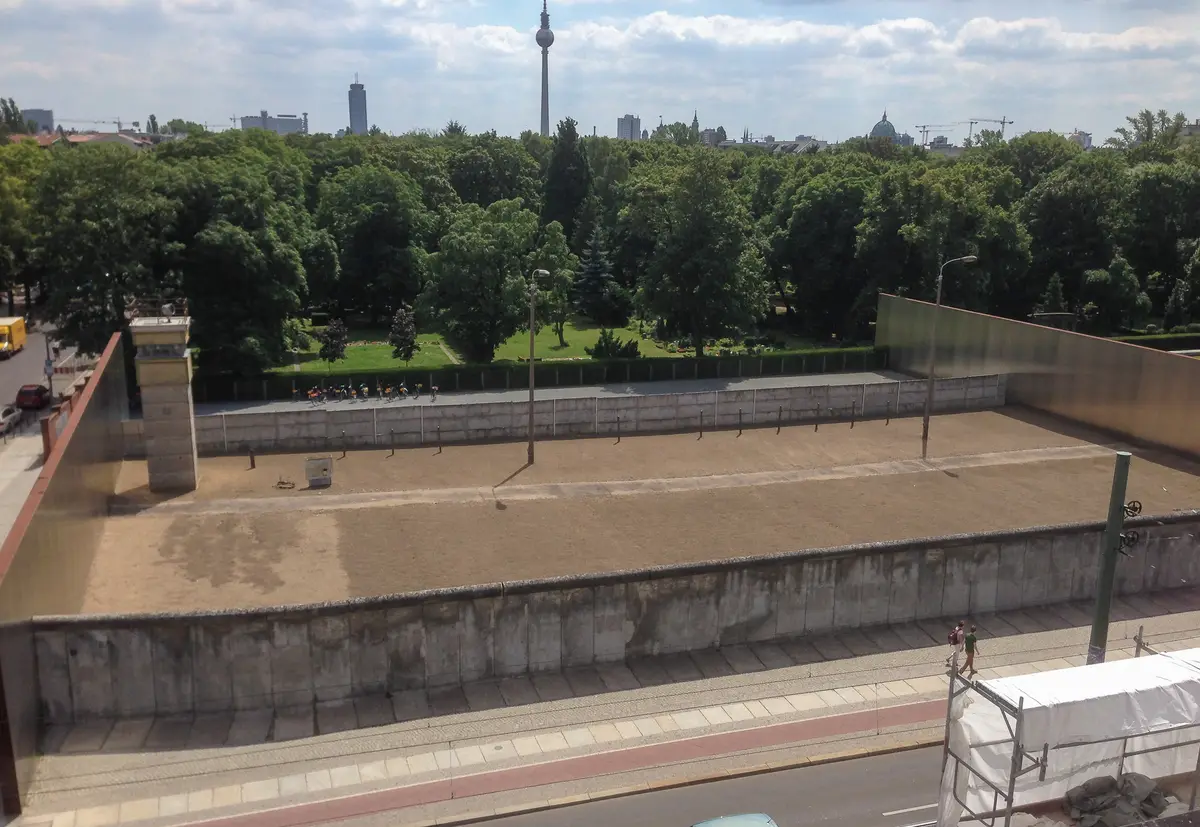
What survived did so mostly by argument. In Berlin the preserved stretches are the ones somebody fought for after the fact — 200 metres on Niederkirchnerstraße, 1.3 kilometres at the East Side Gallery, a single run at Leipziger Platz that the environment ministry now plans to build into its foyer. Of 302 watchtowers and observation towers, five still exist and three are on Berlin territory.
Surplus stock also moved in bulk, and not all of it found a home. In July 2007 a Florida foundation imported about 350 slabs of the inner wall to Tampa Bay, intending to sell a hundred wall monuments to North American communities at between fifty and a hundred thousand dollars each. The plan failed. The first and almost only buyer was the city of Saint Petersburg, Florida.
Where the pieces are now
The two countries that hold the most are Germany with 197 records and the United States with 151. After that it is a long tail: 62 countries, most with one or two. A wall element with a door in it — the only one known outside Germany — is in a factory in Nagasaki Prefecture. Two more are in a museum on a subtropical Japanese island that built a German culture village around an 1873 shipwreck rescue. Three sections of the inner wall are on loan to a memorial at a Romanian torture prison.
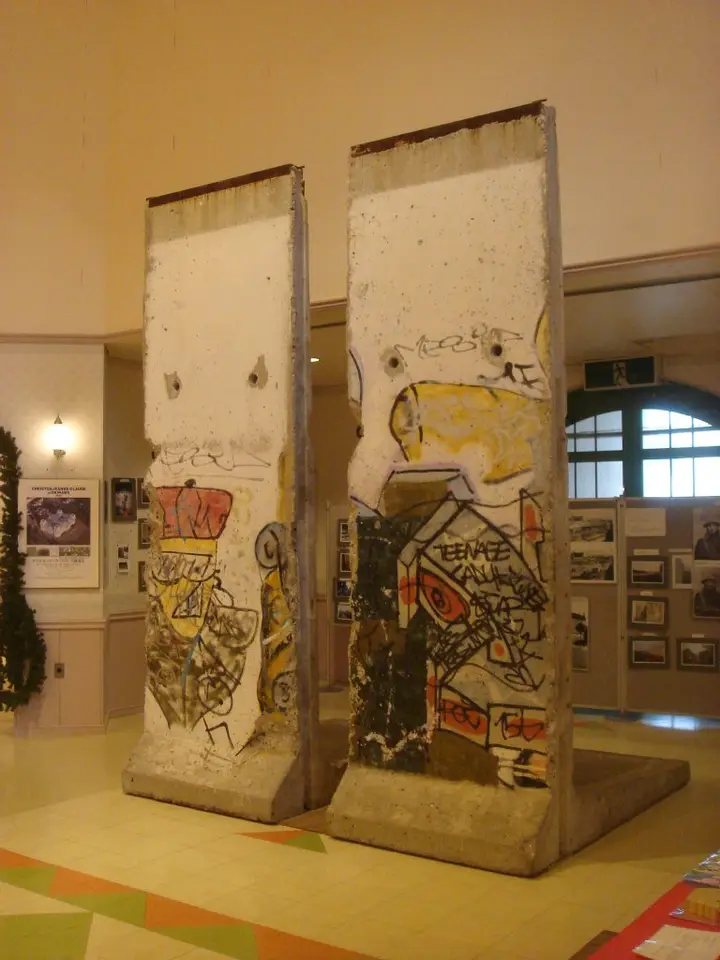
One caution about all such counts, including this one. A piece of the Berlin Wall means a 2.6-tonne element, a hand-sized lump in a vitrine, and a chip in a gift-shop bag, and sources use the phrase for all three without distinguishing. Every record in this catalogue is marked Reported: it means a credible source says the object is there, not that anyone has been to check. You can browse the whole catalogue on the map, or by country.
Sources
- Where Have All the Fragments Gone? — Lapham's QuarterlyThe commercial sale of the Wall from 1990, the scale of the dispersal, and the questions over the proceeds.
- Chronicle of the Wall, June 1990 — Chronik der MauerThe contemporary record of the June 1990 auction and the dismantling programme.
- Federal Foundation — Berlin Wall worldwide, Basel site entryThe Monaco auction of 23 June 1990 at the Hotel Metropole Palace, its eighty-one lots, the catalogue and certificates, the destination announced for the proceeds, and the Kiddy Citny hearts painted on Waldemarstraße in 1984.
- Federal Foundation — Berlin Wall worldwide, Saint Petersburg site entryThe Outdoor Art Foundation's delivery of about 350 inner-wall slabs to Tampa Bay in July 2007 and the failure of its plan to place a hundred monuments.
- A partial victory for the wall artists — tazThierry Noir and Kiddy Citny's legal action over the sale of their painted segments and its outcome.
- Watchtower at Potsdamer Platz — Berlin.deOf 302 watchtowers and observation towers, five survive, three of them on Berlin territory.