The Berlin Wall was not a wall. It was two walls with a killing ground between them, and almost every popular account — and a good deal of the labelling on surviving segments around the world — collapses the two into one.
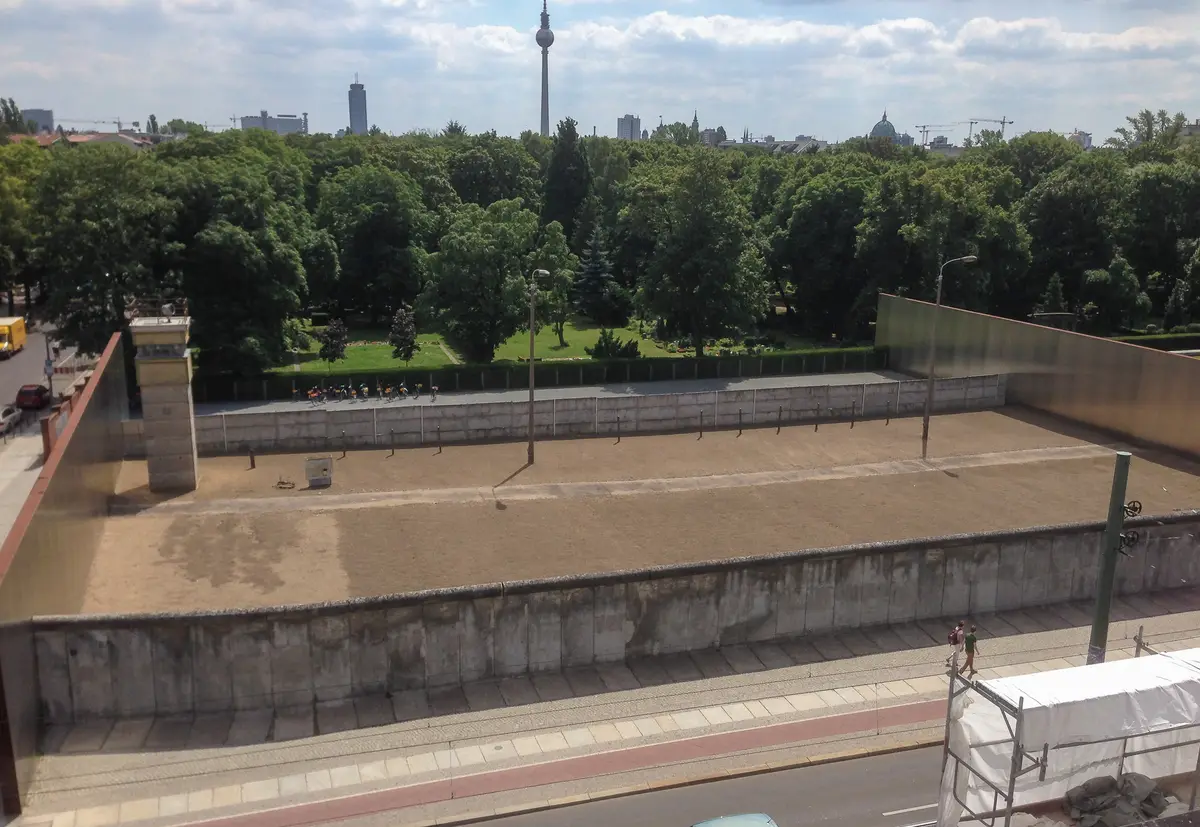
The outer wall, the Grenzmauer, faced West Berlin. Behind it came the death strip: raked sand, floodlights, a patrol road, a signal fence, dog runs and watchtowers. Then the inner wall, the Hinterlandmauer, facing East Berlin, which is what an East Berliner would have seen if they got close enough to see anything.
- Hinterlandmauer, the inner wall, facing East Berlin
- Signal fence
- Dog run
- Patrol road
- Watchtower and floodlights
- Raked sand
- Grenzmauer 75, the outer wall, facing West Berlin
What the object actually is
The familiar element is the Grenzmauer 75, the fourth generation, which began replacing earlier versions in the middle of the 1970s after a development and testing programme. The Berlin heritage office describes it precisely: an L-shaped section of precast concrete of the kind farmers used to build open silos, 3.60 metres high and 1.20 metres wide, finished along the top with a smooth asbestos-concrete pipe 40 centimetres across. It needed no foundation and could stand on any firm ground. It was robust enough to stop a vehicle. And it presented clean, uniform lines to the west.
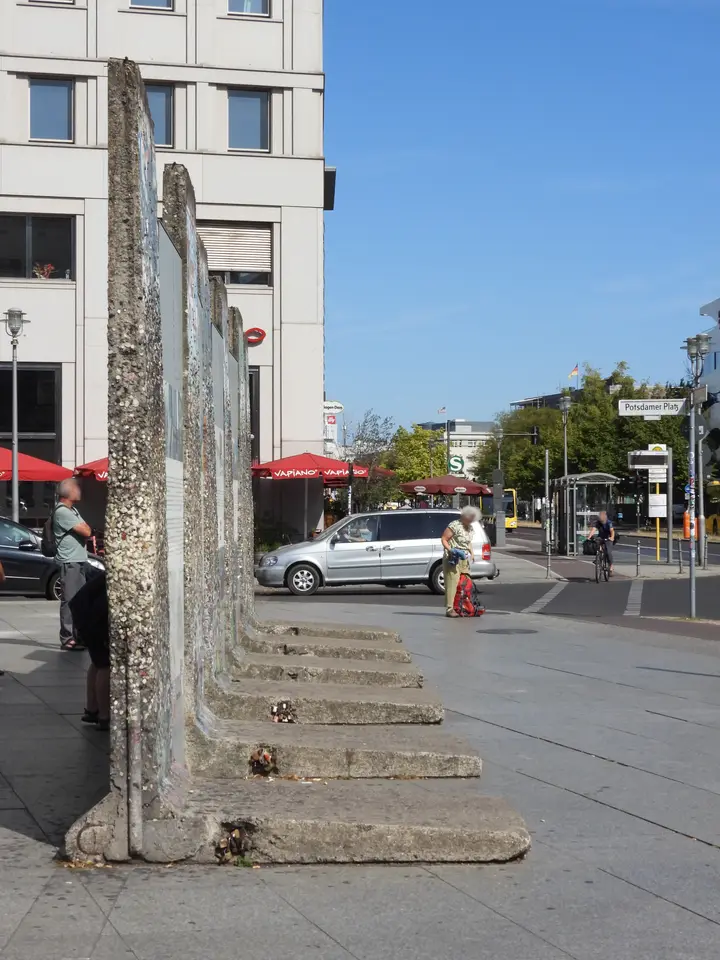
That last property is not incidental. Every segment in this catalogue, in 62 countries, is a mass-produced agricultural component that was selected partly because it looked tidy from the other side.
The famous wall is the inner one
The East Side Gallery is 1.3 kilometres long, the longest surviving run anywhere, painted with 106 murals by artists from twenty-one countries in the spring of 1990. It is the image on the postcards. It is the hinterland wall.
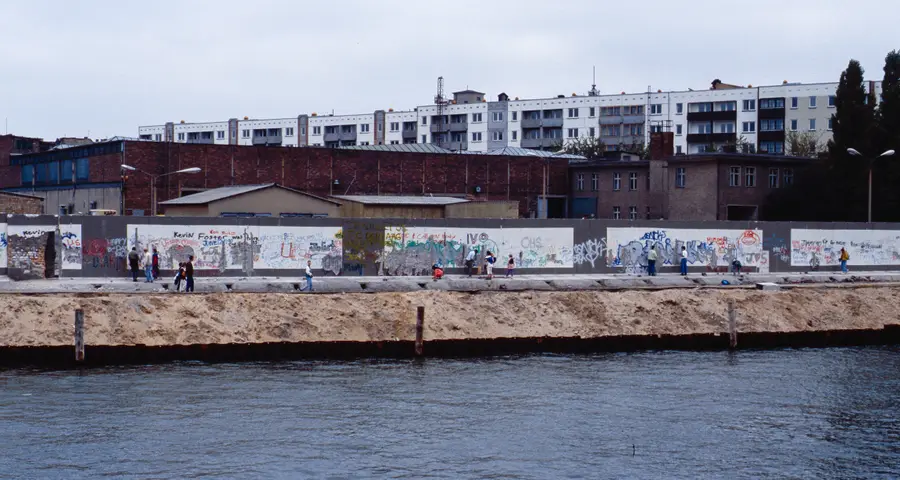
The reason is geography. Between the Schillingbrücke and the Osthafen the entire width of the Spree was East Berlin territory, so there was no need for an outer wall at all: the river did that work, watched by patrol boats. What stands on the Friedrichshain bank is the inner wall, and nobody in West Berlin ever saw it.
It does not look like an inner wall, and that was deliberate. Because the stretch lay on the protocol route that state visitors took from Schönefeld airport into the city, it was built from Grenzmauer 75 elements — the pattern otherwise reserved for the wall facing west. A few metres away stands a listed fragment of the ordinary sort: a pre-existing industrial brick wall, reinforced with hollow blocks. Pieced-together brick where nobody important would see it; smooth concrete where they would.
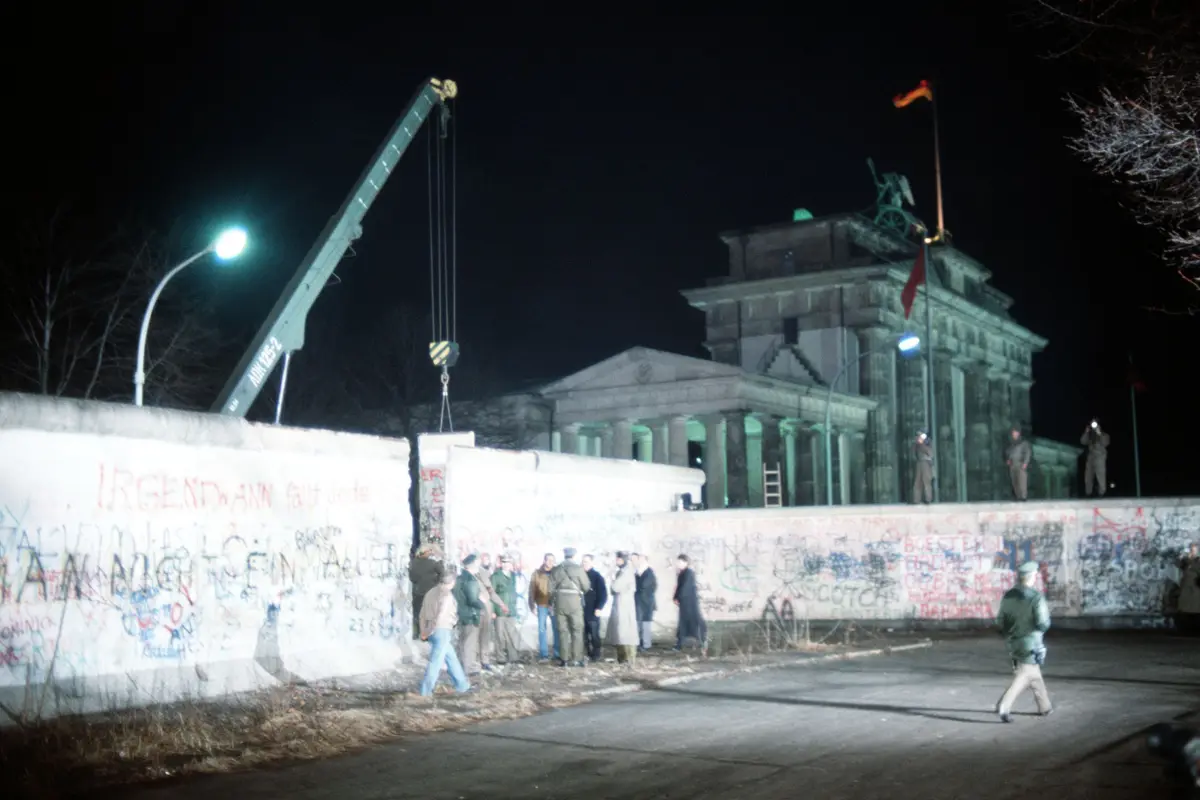
The same thing happened at Leipziger Platz, where the surviving hinterland wall was also built to Grenzmauer 75 specification because Western viewing platforms overlooked it. The GDR leadership's recorded justification was that it would enhance the political appeal of the capital at the sightseeing attractions of the Brandenburg Gate and Leipziger Platz. The inner wall at the most photographed point of the border was dressed to be photographed.
Four provenances, one label
Once you know there were two walls, a travelling segment resolves into four quite different objects.
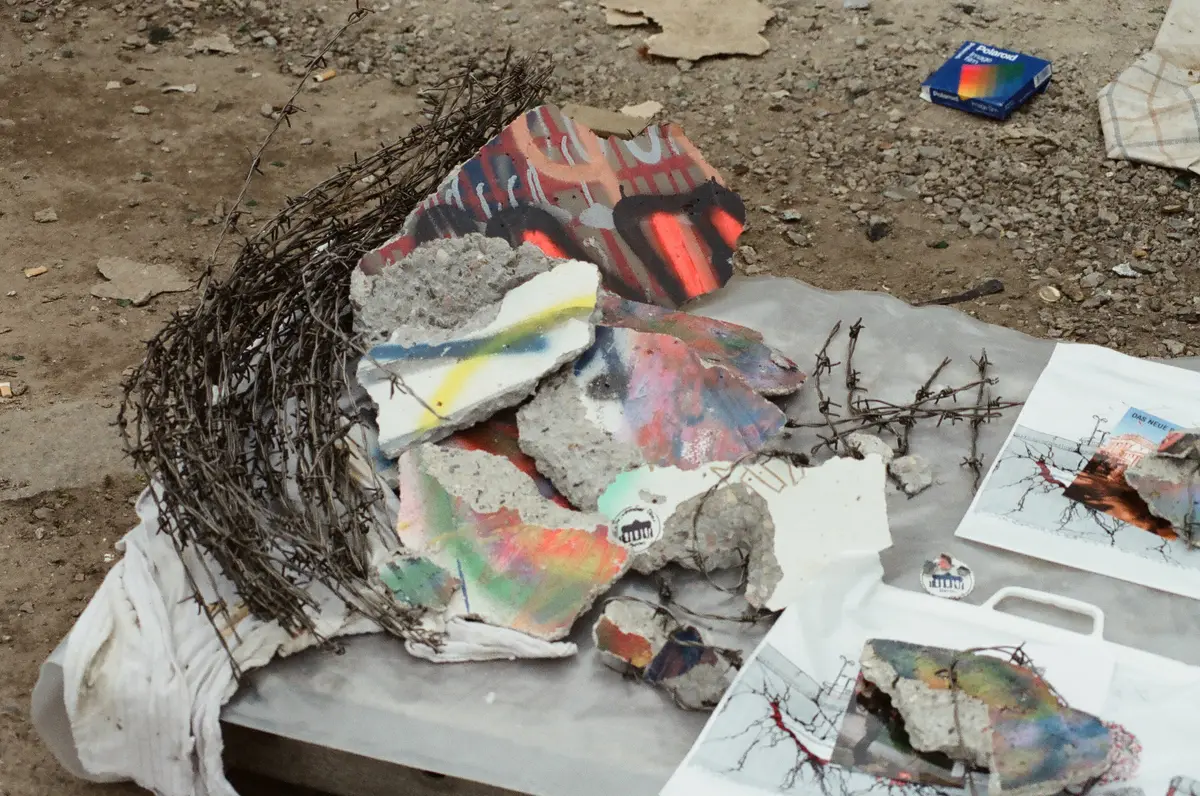
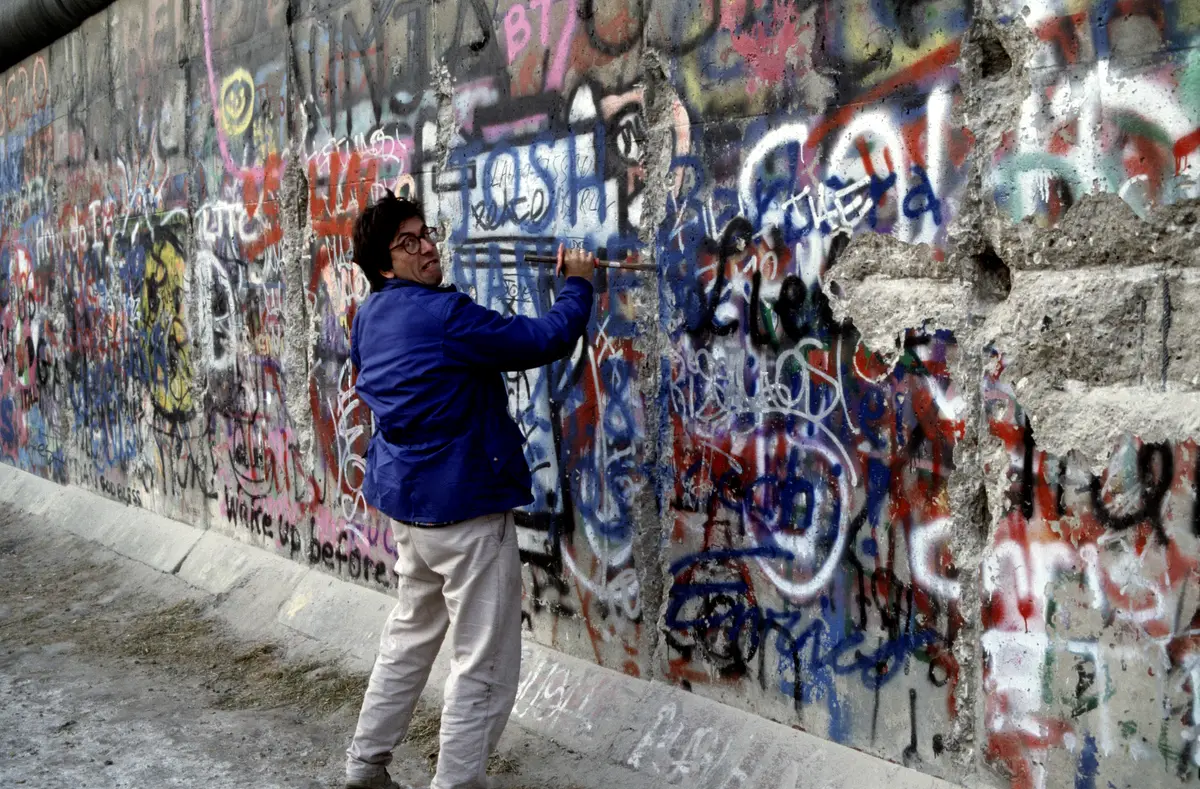
An outer wall element with its original west-face paint is the rarest and the closest to what people imagine. An outer wall element repainted for sale in 1990 is genuine concrete with a fresh picture. An inner wall element painted after 1989 — including much of what was sold later — carries a surface that never faced anybody. And a plain element with no paint at all is the most honest of the four and the least likely to be bought.
All four get the same label on the plaque. Records in this catalogue say which where the source says: the three elements on loan to the memorial at Pitești are hinterland wall, as are the 350 slabs shipped to Florida in 2007 and the concrete blocks given to Korean artists on Jeju.
The rest of the structure travelled too
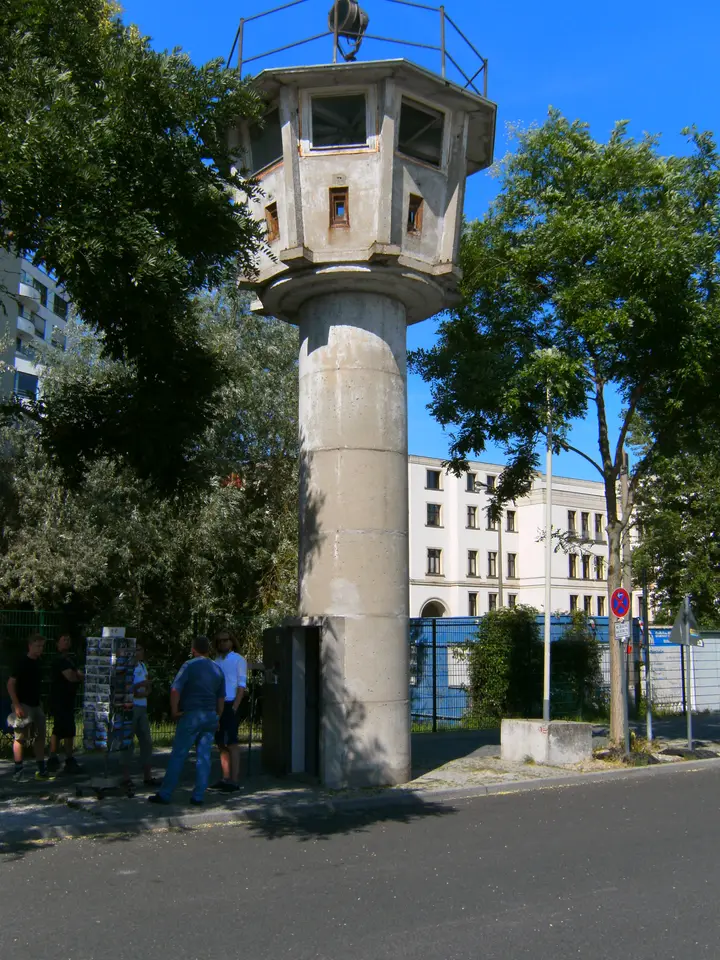
The Wall was a system, and pieces of the rest of it survive. Of 302 watchtowers and observation towers, five remain, three of them in Berlin: the command post at Kieler Eck, the command post at Schlesischer Busch, and the last mushroom-shaped panorama tower on Erna-Berger-Straße, abandoned as a design because its narrow shaft made it hard for guards to get out quickly. And the last genuine guardhouse from Checkpoint Charlie is not at Checkpoint Charlie, where the hut is a replica, but in a museum in the Berlin suburb of Dahlem, seven kilometres away.
The useful question
Standing in front of a slab in a car park in Ohio, do not ask whether it is real. Ask which wall it is, which face you are looking at, and when the paint went on. Those three answers are usually obtainable, and together they are worth more than a certificate.
Sources
- Niederkirchnerstraße — Landesdenkmalamt Berlin, Wall monumentsThe Grenzmauer 75 as the fourth generation: L-shaped precast sections of the kind used for open silos, 3.60 m by 1.20 m, topped with a 40 cm asbestos-concrete pipe, requiring no foundation, resistant to vehicles and presenting uniform lines to the west.
- East Side Gallery — Landesdenkmalamt Berlin, Wall monumentsThe 1.3 km run and its 106 murals by artists from twenty-one countries, the identification of the East Side Gallery as hinterland wall, its construction from Grenzmauer 75 elements because of the protocol route from Schönefeld, and the adjoining listed fragment of reinforced industrial brick wall.
- Leipziger Platz — Landesdenkmalamt Berlin, Wall monumentsThe surviving hinterland wall built in the Grenzmauer 75 form for the benefit of Western viewers, and the GDR leadership's stated reasoning about the political appeal of the capital at the sightseeing attractions.
- An der Schillingbrücke — Landesdenkmalamt Berlin, Wall monumentsThe whole width of the Spree between Schillingbrücke and Osthafen being East Berlin territory, the absence of an outer wall there, and the patrol boats that took its place.
- Building and development of the Berlin Wall — Landesdenkmalamt BerlinThe generations of the border installations and the arrangement of outer wall, death strip and hinterland wall.
- Wachturm Erna-Berger-Straße — Landesdenkmalamt Berlin, Wall monumentsThe panorama observation tower, its introduction in 1969 and its replacement by square towers because the narrow shaft was unstable and slow to leave.